
Resentment Navigator
Does your resentment feel justified—
but leave you exhausted and stuck?
Resentment tells you when something is wrong, but it can’t tell you what to do when the other person refuses to make it right.
Popular advice tells you to set boundaries, forgive, or let it go. These responses can help sometimes. But they tell you what to do before considering how complex your situation might be. In real life, you’re forced to manage several problems at once, and simple advice won’t change that.
Resentment Navigator begins one step earlier. We seek clarity about your situation and feelings before offering solutions.
Instead of treating resentment as a flaw, we ask what you believe was wrong.
Instead of asking you to forgive, we ask what you need to protect or set right.
Instead of dismissing resentment when it hurts you, we look for less costly yet effective strategies.
Instead of telling you what to do, we help you see what your options are.
No blaming you for recognizing wrongdoing. No forced forgiveness. No pretending nothing happened. No pressure to reconcile with someone unsafe.
The Personalized Assessment & Plan helps you find new leverage points by revealing the mind’s role in resentment. More leverage means more options, and more options means better results.
When is Resentment a Problem?
Resentment is often compared to drinking poison while waiting for someone else to die. The comparison points to a real risk: resentment can harm you without affecting the person who wronged you.
But resentment isn’t invalid simply because it has costs. The problem is when resentment doesn’t do the job it’s supposed to—like protecting your safety, defending your dignity, or delivering justice. It’s also a problem when pursuing these ends comes with unnecessary costs.
How the Assessment Helps
The Personalized Assessment & Plan helps you move from a response that feels necessary but exhausting toward one that better serves what matters to you.
Clarify what matters: The problem is not merely “how do I stop feeling resentful?” It is also “what was violated, what am I trying to protect or obtain, and why does it matter?” Clarifying what matters gives you direction and purpose.
Find points of leverage: Resentment is not treated as a single feeling that must simply be released. It is treated as a process with mechanisms that can be understood and influenced. Finding those points of leverage can increase your options without requiring you to excuse the wrong that was done.
Choose an effective strategy: The goal is not automatically forgiveness or emotional relief. The goal is to protect what matters to you and avoid unnecessary costs where possible. Choosing an effective strategy increase your odds of that happening.
What You’ll Get
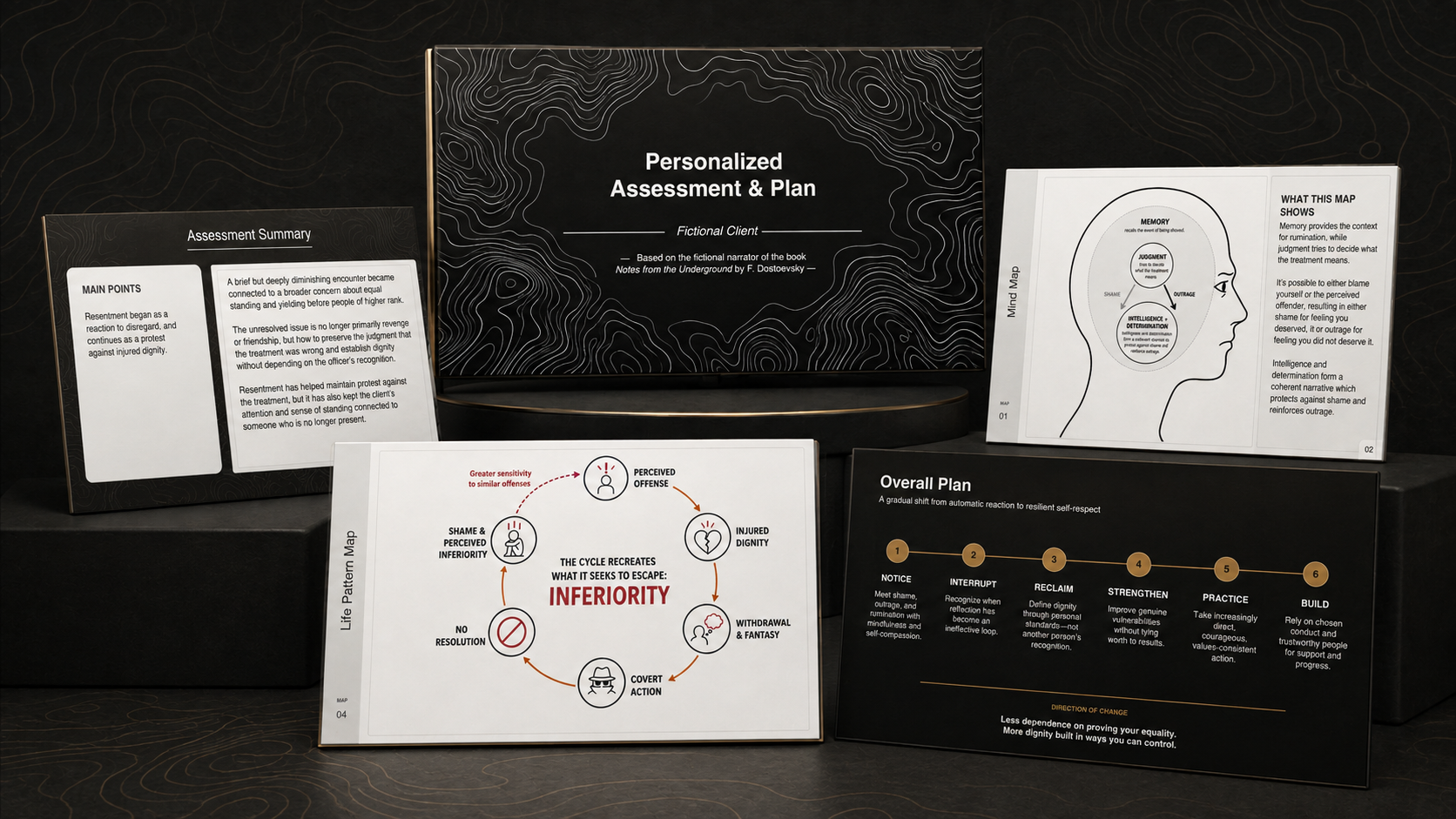
The Personalized Assessment & Plan includes:
Guided journaling questions
A written assessment
Two personalized mind maps
A life pattern map
A practical plan
This is a coaching program, not a mental health diagnosis or substitute for therapy. Further coaching may be recommended, but the service is designed to be useful on its own.

Who You’ll Work With
I’m Damodar Roe, the creator of Resentment Navigator.
I previously offered general coaching, but I gradually saw that resentment was not being addressed in its full complexity. Advice about boundaries and people-pleasing can be useful, but it tends to assume you simply need to be told what to do. It’s easier said than done when you’re wrestling with complicated situations and conflicting desires. Forgiveness can also place the responsibility on the person who was harmed, rather than the person who did the harm.
I took a long break to study resentment both psychologically and philosophically—with writers such as Nietzsche, Max Scheler, Gilles Deleuze, Jean Améry, and Dostoevsky. I didn’t agree with everything they said, but their work confirmed the gap I had noticed: A program to help people navigate resentment without blaming them for having it.
Resentment Navigator is designed to help you navigate resentment without oversimplifying your situation or asking you to abandon your moral judgment.
What to Expect
You will go through four steps:
Complete the guided journaling questions.
Attend the Assessment Interview Session.
Receive your personalized maps, assessment report, and practical plan.
Attend the Plan Presentation Session.
What the process asks of you: The journaling takes about 30 minutes. Each of the two sessions lasts 60 minutes. The whole process is done within a week of submitting your journaling answers.
There is room to explain what happened and why you believe it was wrong. The process may involve revisiting difficult experiences and examining some of your current interpretations or responses. You can question or correct the findings, and you decide which steps make sense. You will not be pressured to forgive, reconcile, or disclose more than you choose.
The process cannot guarantee acknowledgment, an apology, or change from another person. Its purpose is to clarify what can realistically change, where you still have choices, and which practical next steps make sense.

Who This Is For
This service is designed for people who:
Feel their resentment is justified but are tired of carrying it
Feel stuck or uncertain about what to do next
Are willing to examine what keeps it active and focus on the choices that remain theirs
You may have tried to let it go, keep the peace, or set boundaries, only to find the same thoughts returning with the original tension. You want relief, but not at the cost of pretending what happened was acceptable. You want to understand why the resentment keeps coming back and find a way forward—even if the other person does not change.
The Next Step
A short application helps determine whether this structured service is right for you. If it is, you will receive purchase and scheduling instructions within two business days.
The application takes approximately 10 minutes to complete. Everything you share is strictly confidential. No payment is required to apply.